Is eSIM Safe? Security & Privacy Guide for Travelers
Dive into eSIM security and privacy for travelers in 2026. Learn how eSIMs prevent SIM swapping, protect data, and enhance your digital safety abroad.
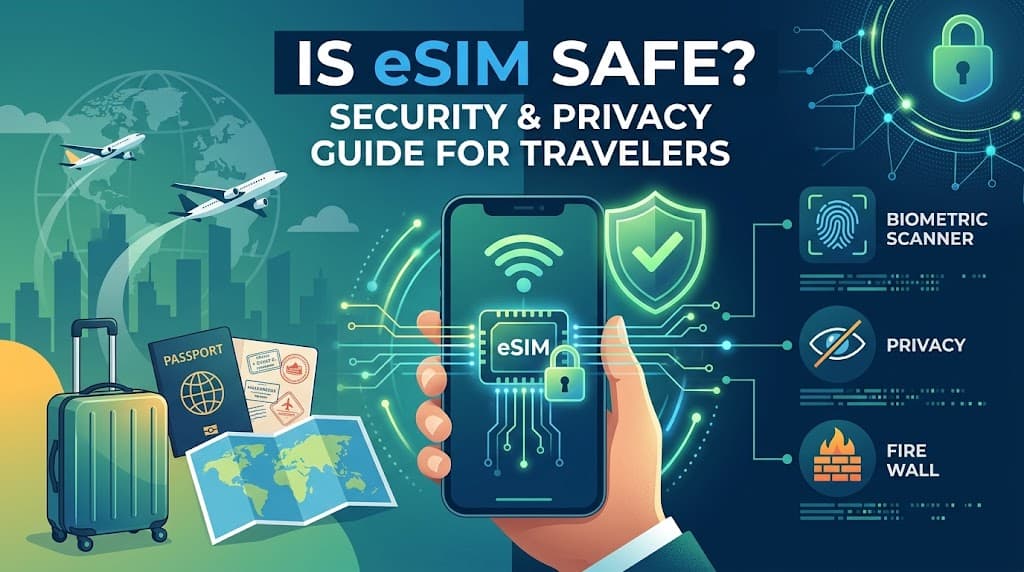
Is eSIM Safe? Your Ultimate Security & Privacy Guide for Travelers in 2026
In an increasingly interconnected world, the freedom of international travel comes with its own set of digital challenges. From navigating unfamiliar public Wi-Fi networks to safeguarding your personal data against sophisticated cyber threats, staying secure while abroad is paramount. As your trusted experts in global connectivity, we at FindMyEsim.io, comparing 154+ providers and 13169+ plans, understand that peace of mind is as crucial as a reliable connection.
This comprehensive guide for 2026 dives deep into the security and privacy aspects of eSIM technology, equipping you with the knowledge and actionable strategies to protect your digital life while exploring the globe. We'll explore how eSIMs inherently offer superior security compared to traditional physical SIMs, what privacy considerations you should keep in mind when purchasing a plan, how to safeguard your data on public networks, and essential best practices for a truly secure international experience.
The Digital Evolution: eSIM vs. Physical SIM – A Security Showdown
For years, the physical SIM card has been the cornerstone of mobile connectivity. But its tangible nature, ironically, is its greatest vulnerability. Enter the eSIM – a small, embedded chip within your device that eliminates the need for a physical card. Beyond convenience, this digital shift brings significant security enhancements.
The Achilles' Heel of Physical SIMs: SIM Swapping
Perhaps the most insidious threat associated with physical SIM cards is SIM swapping. This elaborate fraud involves criminals tricking your mobile carrier into transferring your phone number to a SIM card they control. Once they have control of your number, they can:
- Bypass Two-Factor Authentication (2FA): Many online services use SMS-based 2FA, sending codes to your phone number. With your number, criminals can intercept these codes and gain access to your banking, email, social media, and cryptocurrency accounts.
- Impersonate You: They can use your number to make calls, send texts, and potentially access your contacts, leading to further identity theft.
- Financial Ruin: The ultimate goal is often to drain bank accounts, make unauthorized purchases, or steal valuable digital assets.
The scary truth is that SIM swapping doesn't require physical theft of your phone; it exploits vulnerabilities in carrier security protocols and social engineering tactics.
How eSIM Fortifies Your Digital Identity
The very nature of eSIM technology provides a robust defense against SIM swapping and other physical threats:
- No Physical Card to Swap: Since an eSIM is embedded directly into your device's hardware, there's no physical card for a criminal to steal, lose, or swap. This immediately eliminates the primary vector for SIM swap attacks.
- Tied to Your Device: eSIM profiles are digitally provisioned and tied to your specific device. Transferring an eSIM profile typically requires device-level authentication and often involves QR codes or activation codes unique to a single installation, making unauthorized transfers significantly harder. If you want to learn more about how this works, check out our guide on How to Install an eSIM on iPhone & Android (Step-by-Step Guide for 2026).
- Remote Management & Deactivation: In the unfortunate event of device theft, while your phone itself is still at risk, the digital nature of an eSIM means your provider can often remotely deactivate the eSIM profile associated with the stolen device, preventing unauthorized usage more swiftly than with a physical SIM.
- Enhanced Encryption: The communication between your device and the carrier for eSIM profile management often utilizes stronger encryption protocols compared to the older systems used for physical SIM provisioning, adding another layer of security.
By removing the physical element, eSIMs inherently reduce the attack surface for identity theft and unauthorized access, making them a cornerstone of modern mobile security for travelers.
Privacy Considerations When Buying eSIM Plans
While eSIMs offer enhanced security, privacy is a distinct, though related, concern. When you purchase and use an eSIM plan, certain data is inevitably collected. Understanding this helps you make informed choices.
Understanding Data Collection by eSIM Providers
When you sign up for any mobile service, some personal data is required for billing, service provision, and regulatory compliance. For eSIM plans, this typically includes:
- Personal Identifiable Information (PII): Your name, email address, billing address, and payment information (credit card details, PayPal, etc.). Some providers, especially those requiring KYC (Know Your Customer) for local regulations, might ask for passport details or ID verification.
- Usage Data: This includes your data consumption, call records (if applicable), and network activity. This data is essential for billing and for the provider to optimize network performance.
- Location Data: Your general location is known to the network for service delivery. Specific location tracking depends on the provider's policy and your device's privacy settings.
It's important to differentiate between traditional local mobile operators and global travel eSIM providers. Global providers, like many you find on FindMyEsim.io, often act as resellers or aggregators. They typically collect less detailed PII than a direct local carrier might, focusing primarily on what's needed for the transaction and service delivery.
The Importance of Reputable Providers
Choosing your eSIM provider wisely is crucial for privacy. Not all providers are created equal when it comes to data handling and security practices. This is where FindMyEsim.io becomes an invaluable resource.
As experts comparing 154+ providers across 203+ countries with 13169+ plans, we simplify your search for reliable and trustworthy options. We encourage you to Compare eSIM Providers and review their privacy policies before committing to a plan.
Look for providers that:
- Have Clear Privacy Policies: They should transparently outline what data they collect, why, and how they protect it.
- Are GDPR Compliant: If operating in or serving customers from the EU, compliance with the General Data Protection Regulation (GDPR) is a strong indicator of robust data protection standards.
- Use Secure Payment Gateways: Ensure their checkout process is encrypted and uses reputable payment processors.
- Have a Good Reputation: Check reviews and testimonials for any red flags regarding data breaches or privacy concerns.
Payment Security & Anonymity
When purchasing an eSIM, your payment details are a primary concern. Always ensure the website uses HTTPS (look for the padlock icon in your browser) and secure payment gateways. For those seeking greater anonymity, consider:
- Virtual Credit Cards: Many banks offer virtual card numbers that can be used for single transactions or set with spending limits, adding a layer of protection against fraud.
- Cryptocurrency: A few eSIM providers might accept cryptocurrency, offering a higher degree of anonymity for the transaction itself, though your usage data will still be linked to your eSIM profile.
Data Protection on Public Networks Abroad: A Minefield for Travelers
While your eSIM provides a secure connection to your mobile network, many travelers still rely on public Wi-Fi for convenience or to save on data costs. This can be a significant privacy and security risk.
The Dangers of Public Wi-Fi
Public Wi-Fi networks (in airports, cafes, hotels, etc.) are notorious for their vulnerabilities:
- Man-in-the-Middle (MITM) Attacks: Cybercriminals can intercept data passing between your device and the Wi-Fi hotspot, allowing them to eavesdrop on your online activities, steal login credentials, or even inject malware.
- Unencrypted Connections: Many public Wi-Fi networks lack proper encryption, meaning your data is transmitted in plain text, making it easy for anyone on the same network to intercept.
- Rogue Wi-Fi Hotspots: Attackers can set up fake Wi-Fi networks with legitimate-sounding names (e.g., "Airport_Free_WiFi") to trick unsuspecting users into connecting, immediately compromising their devices.
- Malware Injection: Some compromised public Wi-Fi networks can be used to inject malware directly onto your device.
Even with strong passwords, if the network itself is compromised or unencrypted, your data is at risk.
Your eSIM as a Secure Alternative
This is where your eSIM truly shines as a security asset. Using your eSIM's mobile data connection is generally far more secure than relying on public Wi-Fi because:
- Dedicated Connection: Your mobile data connection is a dedicated, encrypted link between your device and your mobile carrier's network.
- Carrier-Level Security: Mobile carriers implement robust security measures to protect their networks and your data in transit.
- Reduced Attack Surface: You're not sharing a network with unknown individuals, significantly reducing the risk of MITM attacks or rogue hotspots.
Whenever possible, prioritize using your eSIM's mobile data, especially for sensitive activities like online banking, shopping, or accessing personal accounts. For those looking for cost-effective options, remember to check out our Cheapest eSIM Plans in 2026: Your Ultimate Guide to Budget Connectivity to find plans that offer ample data without breaking the bank.
VPNs: Your Essential Digital Shield Abroad
Even with the inherent security of an eSIM, a Virtual Private Network (VPN) is an indispensable tool for every international traveler. A VPN adds a critical layer of encryption and anonymity, regardless of whether you're on mobile data or a trusted Wi-Fi network.
What is a VPN and Why Every Traveler Needs One
A VPN creates a secure, encrypted tunnel between your device and a server operated by the VPN provider. All your internet traffic passes through this tunnel, masking your real IP address and encrypting your data. Here's why it's vital:
- Data Encryption: A VPN encrypts all your internet traffic, rendering it unreadable to anyone who might intercept it (ISPs, hackers, governments). This is especially crucial on public Wi-Fi.
- IP Address Masking: By routing your traffic through a VPN server in another location, your actual IP address is hidden. This prevents websites and services from tracking your real geographical location, enhancing your privacy.
- Bypassing Geo-Restrictions: While primarily a privacy tool, VPNs also allow you to access content and services that might be restricted in your current travel destination by connecting to a server in a different country.
- Protection Against Censorship: In countries with strict internet censorship, a VPN can help you bypass restrictions and access the open internet.
Choosing the Right VPN Provider
Not all VPNs are created equal. When selecting a VPN for travel, prioritize these features:
- No-Log Policy: The VPN provider should have a strict, audited no-log policy, meaning they do not record your online activities.
- Strong Encryption Protocols: Look for industry-standard protocols like OpenVPN, WireGuard, or IKEv2/IPsec.
- Kill Switch: This feature automatically disconnects your device from the internet if the VPN connection drops, preventing your real IP address from being exposed.
- Large Server Network: A wide range of server locations provides more options for bypassing geo-restrictions and finding faster connections.
- Simultaneous Connections: Ensure the VPN allows you to connect multiple devices (phone, laptop, tablet) under a single subscription.
- Reliable Customer Support: Good support can be invaluable if you encounter issues while abroad.
Actionable VPN Recommendations (Features to Look For)
While specific brand recommendations can change, the criteria for a high-quality, secure VPN remain constant. Here's a comparison to guide your choice:
| Feature | Premium (Paid) VPN | Free VPN (Caution Advised) |
|---|---|---|
| Encryption | Strong, industry-standard (AES-256) | Often weaker or non-existent |
| Logging Policy | Strict no-logs (often audited) | May log and sell your data |
| Speed & Reliability | High-speed servers, consistent performance | Often slow, throttled, unreliable |
| Server Network | Extensive, global server locations | Limited servers, often overcrowded |
| Security Features | Kill switch, DNS leak protection, split tunneling | Rarely includes advanced features |
| Privacy | Designed to protect user privacy | May compromise privacy for revenue |
| Ads | Ad-free experience | Often includes intrusive ads |
| Customer Support | 24/7 professional support | Limited or community-based support |
| Data Limits | Unlimited data | Strict data caps |
As a rule of thumb, avoid free VPNs for anything sensitive. They often recoup costs by collecting and selling user data, displaying ads, or offering subpar security. Investing in a reputable paid VPN is a small price to pay for significant peace of mind.
Comprehensive Security Best Practices for International Connectivity
Beyond your eSIM and VPN, a holistic approach to digital security involves several fundamental best practices.
Device Security Fundamentals
- Strong Passcodes & Biometrics: Always use strong, unique passcodes or PINs for your devices. Enable biometric authentication (fingerprint, face ID) for added convenience and security.
- Keep Software Updated: Regularly update your device's operating system and all applications. Updates often include critical security patches that protect against newly discovered vulnerabilities.
- Enable Remote Wipe/Lock: Configure your phone's 'Find My Device' (iOS) or 'Find My Phone' (Android) feature. In case of theft or loss, you can remotely locate, lock, or even wipe your device to protect your data.
- Encrypt Your Device: Most modern smartphones encrypt data by default, but double-check to ensure your device's storage is encrypted.
Secure Browsing Habits
- HTTPS Everywhere: Always look for 'https://' in website URLs (and the padlock icon). This indicates an encrypted connection. Avoid entering sensitive information on sites without HTTPS.
- Be Wary of Phishing: Exercise extreme caution with emails, messages, or pop-ups requesting personal information, even if they appear to be from legitimate sources.
- Use a Password Manager: Generate and store strong, unique passwords for all your online accounts using a reputable password manager. This prevents credential stuffing attacks if one account is compromised.
Managing Digital Footprint & Permissions
- Review App Permissions: Periodically review the permissions you've granted to apps on your phone. Limit access to your location, camera, microphone, and contacts to only those apps that genuinely need it.
- Limit Location Sharing: Turn off location services for apps that don't require it, and consider disabling global location tracking when not in use.
- Clear Browser Data: Regularly clear your browser's cache, cookies, and history, especially if using public computers or shared devices.
Backup and Recovery
- Regular Backups: Before and during your trip, regularly back up your important data (photos, documents, contacts) to a secure cloud service or an external hard drive.
- Two-Factor Authentication (2FA): Enable 2FA on all critical online accounts (email, banking, social media, cloud storage). Use authenticator apps (like Google Authenticator or Authy) rather than SMS-based 2FA, which can be vulnerable to SIM swapping.
- Emergency Contacts: Have a list of emergency contacts and important numbers (banks, insurance, family) stored securely, both digitally and physically.
FindMyEsim.io: Your Trusted Partner in Secure Connectivity
At FindMyEsim.io, our mission is to empower travelers with seamless, affordable, and secure global connectivity. By offering a transparent comparison of 154+ providers and 13169+ plans across 203+ countries, we enable you to make informed decisions that prioritize both your budget and your digital safety. Whether you're looking for the most data-rich plan for streaming or a simple, secure connection for emergencies, you can Browse eSIM by Country with confidence, knowing you're choosing from a curated selection of reputable providers.
Our platform is designed to cut through the noise, helping you identify providers with strong security protocols and transparent privacy policies, ensuring that your journey is as digitally secure as it is memorable. We believe that understanding What is an eSIM? The Complete Guide for 2026 is the first step towards a more secure travel experience, and we're here to guide you every step of the way.
Conclusion: Travel Smarter, Connect Safer with eSIM
The landscape of global connectivity is constantly evolving, and with it, the strategies we need to employ to stay safe online. eSIM technology represents a significant leap forward in mobile security, offering inherent protections against threats like SIM swapping that plague traditional physical SIMs. However, true digital security is a multi-layered defense.
By embracing eSIMs, utilizing a robust VPN, practicing diligent device and browsing habits, and choosing reputable providers through platforms like FindMyEsim.io, you can significantly mitigate risks and enjoy a worry-free international travel experience in 2026 and beyond. Travel with confidence, connect with peace of mind, and let your adventures be defined by discovery, not digital distress.
Frequently Asked Questions About eSIM Security & Privacy
Is eSIM inherently more secure than a physical SIM?
Yes, eSIMs are generally more secure than physical SIMs. The primary reason is their digital nature, which makes them immune to physical theft or loss, and significantly harder to target with SIM swapping fraud. An eSIM profile is embedded in your device and digitally provisioned, requiring more complex unauthorized access compared to simply swapping out a physical card. This reduces the attack surface for many common mobile-related security threats.
What personal data do eSIM providers typically collect?
eSIM providers, like any mobile service provider, collect certain personal data necessary for service provision, billing, and regulatory compliance. This typically includes your name, email address, billing information (for payment processing), and usage data (e.g., data consumption). Some providers, particularly those operating under strict local regulations, may require additional identification like passport details. Reputable providers will clearly outline their data collection practices in their privacy policy, which you should always review.
Should I use a VPN when traveling with an eSIM?
Absolutely, a VPN (Virtual Private Network) is highly recommended for all travelers, even when using an eSIM. While your eSIM provides a secure connection to your mobile network, a VPN adds an extra, critical layer of encryption and privacy. It encrypts all your internet traffic, protecting it from eavesdropping, and masks your IP address, enhancing your anonymity online. This is especially vital when connecting to public Wi-Fi networks, but it also adds security even when using your eSIM's mobile data.
Can my eSIM be hacked or cloned?
While no technology is 100% hack-proof, an eSIM is significantly more difficult to hack or clone than a physical SIM. eSIM profiles are securely stored within a tamper-resistant secure element on your device and are protected by strong encryption. Cloning an eSIM would require highly sophisticated attacks on the device's secure element or the carrier's provisioning system, making it an extremely rare and difficult feat for criminals compared to the relatively simpler process of SIM swapping a physical card.
How does FindMyEsim.io help me choose a secure eSIM plan?
FindMyEsim.io acts as your expert guide, comparing 154+ providers and 13169+ plans across 203+ countries. We help you choose a secure eSIM plan by providing a transparent platform where you can easily compare providers. While we don't directly vouch for every provider's internal security, our extensive comparison allows you to identify reputable providers with clear privacy policies and positive user reviews. We empower you to make an informed choice, balancing cost, data needs, and the assurance of selecting a trustworthy connectivity partner for your travels.
FindMyEsim Editorial
eSIM Experts
The FindMyEsim team compares eSIM plans from 40+ providers to help travelers stay connected. We test, review, and analyze pricing so you can find the best deal for every destination.
Find the perfect eSIM for your next trip
Compare plans from 40+ providers across 170+ countries
Compare eSIM Plans