Best eSIM for Kenya: Plans, Prices & Setup Guide (2026)
Unlock seamless connectivity in Kenya with an eSIM. Compare plans, prices, and setup guides for your unforgettable safari or city adventure.
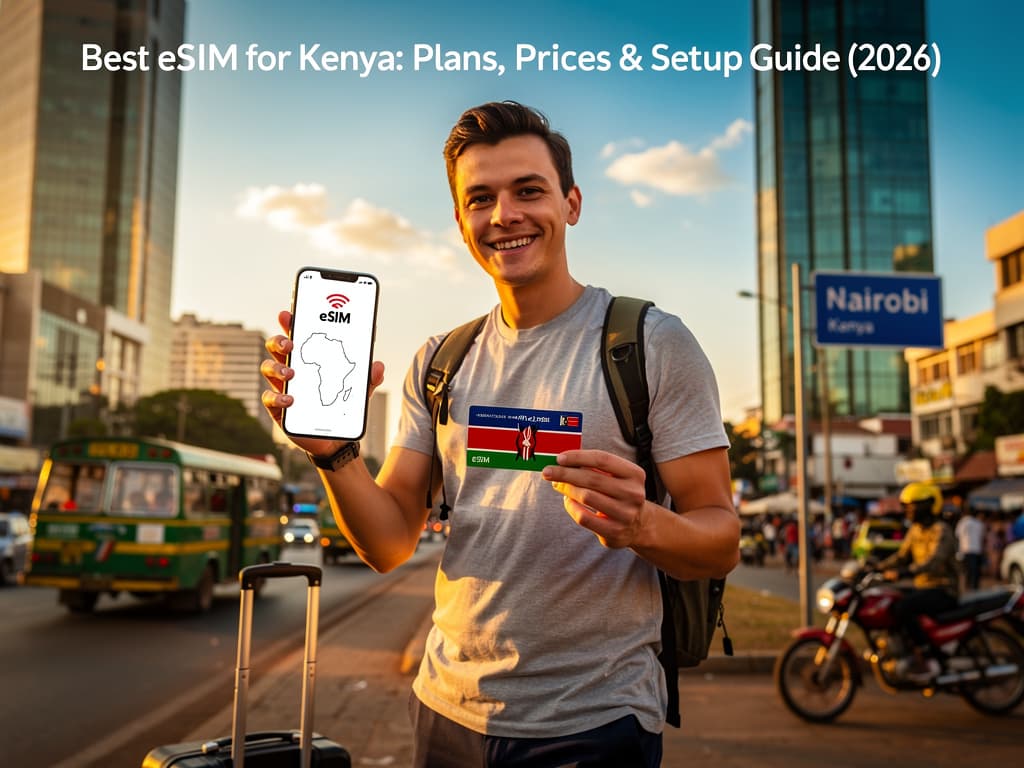
Kenya. The very name conjures images of vast savannas, majestic wildlife, and vibrant cultures. From the iconic wildebeest migration in the Maasai Mara to the pristine beaches of Mombasa and the bustling energy of Nairobi, Kenya offers an adventure like no other. But in the midst of breathtaking landscapes and thrilling encounters, staying connected is often a practical necessity, not just a luxury.
Whether you're sharing stunning safari photos with loved ones, navigating bustling markets, or simply keeping up with work emails, reliable mobile data is crucial. This is where an eSIM becomes your ultimate travel companion, offering a hassle-free and cost-effective way to stay online throughout your Kenyan journey.
Forget the days of hunting for local SIM card vendors, dealing with language barriers, or fumbling with tiny plastic cards. With an eSIM from FindMyEsim.io, you can activate your data plan before you even land, ensuring you're connected the moment your plane touches down at Jomo Kenyatta International Airport.
In this comprehensive guide, we'll explore everything you need to know about using an eSIM in Kenya, from the best providers and plans to setup instructions and essential travel tips. Let's get you connected!

Why You Need an eSIM for Kenya
Traveling to a new country often comes with a unique set of challenges, and mobile connectivity can be one of the most frustrating. Traditional physical SIM cards present several hurdles for international travelers:
- Finding a Local Store: Upon arrival, you'd typically need to locate a mobile operator's store, often navigating unfamiliar territory.
- Registration Hassles: Many countries, including Kenya, require ID registration for local SIM cards, which can be time-consuming and involve paperwork.
- Physical Swapping: You risk losing your home SIM card and dealing with the inconvenience of swapping tiny cards.
- Uncertain Costs: Roaming with your home provider can lead to exorbitant charges, leaving you with bill shock upon your return.
An eSIM, or embedded SIM, eliminates these pain points entirely. Here's why it's the perfect solution for your Kenyan adventure:
- Instant Activation & Convenience: Purchase and activate your plan online, often within minutes, from anywhere in the world. No physical card, no queues, no fuss. You'll be connected the moment you arrive.
- Cost-Effectiveness: eSIM plans are specifically designed for travelers, offering highly competitive rates that are significantly cheaper than international roaming charges. You know exactly what you're paying upfront. For Kenya, plans start from as low as $2.65.
- Dual SIM Functionality: Most eSIM-compatible phones allow you to use both your physical home SIM and your eSIM simultaneously. This means you can keep your home number active for calls and texts while using your eSIM for affordable data in Kenya.
- Enhanced Security: With no physical card to lose or have stolen, your connectivity is more secure.
- Flexibility: Easily switch between plans or top up data directly from your phone. If one plan isn't working out, you can quickly purchase another.
- Environmental Friendliness: Less plastic waste contributes to a greener planet.
In a country like Kenya, where you might be moving between remote safari lodges and bustling urban centers, having reliable, pre-arranged data is invaluable for navigation, communication, and sharing your incredible experiences. To learn more about this revolutionary technology, check out our guide: What is an eSIM? The Complete Guide for 2026.
Best eSIM Providers for Kenya
Finding the perfect eSIM plan can feel overwhelming with so many options available. That's where FindMyEsim.io comes in. Our platform allows you to effortlessly compare plans from a wide range of providers, ensuring you get the best deal for your specific needs. For Kenya, our database shows a robust selection:
- 33 providers currently offer eSIM plans for Kenya.
- A total of 95 active plans are available, catering to every budget and data requirement.
- The cheapest plan starts at just $2.65.
- You can find plans with up to 20GB of data.
Here’s a closer look at some of the top-rated and most popular eSIM providers for Kenya, based on our data:
| Provider | Cheapest Plan (Price) | Max Data Available | Rating (out of 5) | Number of Plans |
|---|---|---|---|---|
| Yoho Mobile | $2.65 | 3GB | 0.0/5 | 14 |
| Firsty | $2.88 | 8GB | 0.0/5 | 2 |
| RedteaGO | $2.90 | 1GB | 0.0/5 | 1 |
| eSIM4Travel | $3.03 | 5GB | 0.0/5 | 2 |
| BNESIM | $4.03 | 1GB | 0.0/5 | 2 |

Detailed Look at Top Providers:
Yoho Mobile
Yoho Mobile stands out for offering the absolute cheapest entry point for Kenya eSIM plans, starting at just $2.65. With 14 different plans, they provide a good range of options, though their maximum data offering is 3GB. This makes them an excellent choice for budget-conscious travelers or those with lighter data needs for shorter trips. Their diverse plan selection means you can likely find a duration and data package that fits your specific itinerary.
Firsty
Firsty offers competitive pricing, with plans starting from $2.88, and provides higher data allowances, up to 8GB. While they have fewer plans (2 plans), their focus on more generous data packages makes them ideal for travelers who anticipate moderate to heavy usage, perhaps for longer stays or for those who rely heavily on streaming, video calls, or extensive navigation.
RedteaGO
RedteaGO provides a straightforward and affordable option starting at $2.90 for 1GB. This provider is perfect for minimalist travelers who primarily need data for essential communication (WhatsApp), quick map checks, and occasional browsing. If you're planning a short trip or know you'll have frequent access to Wi-Fi, RedteaGO offers a simple, no-frills solution.
eSIM4Travel
eSIM4Travel offers plans from $3.03 with data options up to 5GB across their 2 plans. This provider strikes a good balance between cost and data allowance, making it suitable for many travelers. If you need a bit more data than the basic plans but don't require the highest tiers, eSIM4Travel can be a reliable choice for your connectivity needs in Kenya.
BNESIM
BNESIM's plans start from $4.03, offering up to 1GB of data. Similar to RedteaGO, BNESIM caters to users with lower data demands or those who prefer to top up as needed. While slightly higher in price for 1GB compared to some competitors, BNESIM is a reputable provider known for reliable service, which can be a deciding factor for some travelers.
When selecting your eSIM, consider your trip duration, expected data usage, and budget. Remember, you can always use FindMyEsim.io to filter plans by data, duration, and price to find your perfect match. Compare Kenya eSIM Plans now to find the best deal!
How Much Data Do You Need in Kenya?
Understanding your data needs is crucial for choosing the right eSIM plan and avoiding running out of data mid-safari. Here's a breakdown to help you estimate:
Light User (1-3GB for a 7-10 day trip)
You'll primarily use data for:
- Navigation: Google Maps, Waze (download offline maps to save data).
- Messaging: WhatsApp, iMessage, Messenger (text only).
- Email: Checking and sending occasional emails.
- Light Browsing: Quick searches for information.
- Social Media: Very occasional photo uploads.
If this sounds like you, a 1-3GB plan from providers like Yoho Mobile or RedteaGO might be sufficient, especially if you plan to utilize hotel Wi-Fi.
Moderate User (5-10GB for a 7-14 day trip)
In addition to light usage, you'll likely use data for:
- Regular Social Media: Posting photos and short videos, browsing feeds.
- Voice/Video Calls: Occasional WhatsApp calls to family and friends.
- Music Streaming: Listening to music on the go.
- More Extensive Browsing: Researching attractions, checking reviews.
- Light Hotspot Use: Tethering another device briefly.
Plans offering 5-8GB from providers like eSIM4Travel or Firsty would be a good fit here, giving you more freedom without constant worry.
Heavy User (10GB+ for a 14+ day trip or business travel)
You'll be a heavy user if you rely on data for:
- Frequent Video Calls: Regular Zoom or WhatsApp video calls.
- Extensive Streaming: Watching videos on YouTube, Netflix (if downtime allows).
- Heavy Social Media: Constantly sharing updates, stories, and videos.
- Work-Related Tasks: Cloud access, large file transfers, virtual meetings.
- Consistent Hotspot Use: Tethering laptops or multiple devices.
For heavy users, looking for plans with 10GB or more (up to the 20GB maximum available) is advisable. While specific providers for 20GB aren't listed in the top 5, FindMyEsim.io's comparison tool will help you find those higher-tier plans quickly. Remember that Wi-Fi is available in most hotels and lodges, but its speed and reliability can vary, especially in more remote areas. Plan your data usage accordingly, perhaps saving heavy tasks for when you have a strong Wi-Fi connection.
How to Set Up Your eSIM
One of the greatest advantages of an eSIM is its straightforward setup process. You don't need to be a tech wizard to get connected. Here’s a general step-by-step guide:
- Check Device Compatibility: Ensure your smartphone is eSIM-compatible and unlocked. Most newer iPhone models (XS, XR and later), Samsung Galaxy S20 series and later, Google Pixel 3 and later, and many other flagship Android devices support eSIM.
- Purchase Your eSIM Plan: Visit FindMyEsim.io to buy your Kenya eSIM. Select the plan that best suits your data needs and trip duration.
- Receive Activation Details: After purchase, you'll typically receive an email with a QR code or manual activation details. Make sure you have access to this email (or print the QR code) on a separate device or piece of paper, as you'll need to scan it with your phone.
- Install the eSIM:
- On iPhone: Go to Settings > Cellular (or Mobile Data) > Add eSIM (or Add Cellular Plan). Choose to 'Use QR Code' and scan the code you received. Follow the on-screen prompts.
- On Android: Go to Settings > Network & Internet > SIMs > Add more (or + sign for SIMs) > Download a SIM instead? > Next. Scan the QR code. Follow the on-screen prompts.
- Label Your eSIM: Once installed, your phone will prompt you to label your new eSIM (e.g., “Kenya Data” or “Travel SIM”). This helps you differentiate it from your primary SIM.
- Set as Primary for Mobile Data: In your phone's cellular settings, select your newly installed eSIM as the preferred line for mobile data.
- Enable Data Roaming (if necessary): For some eSIM plans, especially those that are regional or global, you might need to enable data roaming in your phone's settings for the eSIM. For country-specific plans, this is often not required, as the eSIM is designed to work directly with local networks.
- Connect! You should now be connected to the local network in Kenya and have access to mobile data.
For a more detailed, step-by-step guide with screenshots for various devices, refer to our comprehensive article: How to Install an eSIM on iPhone & Android (Step-by-Step Guide for 2026).
Coverage & Network Quality
Kenya's mobile network infrastructure is relatively well-developed, especially in urban areas and major tourist destinations. The primary mobile operators are:
- Safaricom: By far the largest and most dominant operator, offering the widest coverage across the country, including many rural areas and national parks. They are known for their reliable 4G/LTE network and the popular M-Pesa mobile money service.
- Airtel Kenya: The second-largest operator, with good coverage in urban centers and along major transport routes. Their 4G/LTE network is strong in cities.
- Telkom Kenya: A smaller operator, providing decent coverage in cities and some surrounding areas.
When you purchase an eSIM for Kenya, it will typically utilize the infrastructure of one or more of these local network providers. Most international eSIM providers partner with the strongest networks to ensure optimal service for their users. This means your eSIM will offer connectivity comparable to a local physical SIM card.
What to Expect:
- Cities (Nairobi, Mombasa, Kisumu): Excellent 4G/LTE coverage, fast speeds, and reliable connectivity.
- Major Tourist Areas (Maasai Mara, Amboseli, Diani Beach): Generally good 4G/LTE coverage, especially around lodges and main viewing areas, though it can be spotty in very remote parts of national parks.
- Rural Areas: Coverage can become more limited and may drop to 3G or even 2G in very remote regions. It's advisable to download offline maps and content before venturing too far off the beaten path.
Before your trip, if you plan to visit particularly remote locations, you might want to check the coverage maps of Safaricom or Airtel Kenya (the likely underlying networks for your eSIM) to get a better idea of expected signal strength. However, for most travelers sticking to well-known routes and destinations, an eSIM will provide perfectly adequate and reliable connectivity.
Tips for Staying Connected in Kenya
Beyond just having an eSIM, a few practical tips can enhance your connectivity experience in Kenya:
- Purchase Your eSIM Before You Go: This is arguably the most important tip. Get your eSIM from FindMyEsim.io before you depart. Install it while you still have a stable internet connection at home. This ensures you're connected the moment you land, avoiding airport Wi-Fi hunts or scrambling for local SIMs after a long flight.
- Download Offline Maps: Even with reliable data, having offline maps (Google Maps, Maps.me, or similar) for Nairobi, Mombasa, or national parks can be a lifesaver, especially in areas with patchy signal. This also saves your data allowance.
- Utilize Hotel & Lodge Wi-Fi: Most hotels, lodges, and guesthouses in Kenya offer Wi-Fi, often free for guests. Use these connections for heavy data tasks like uploading large photo albums, video calls, or streaming, to conserve your eSIM data. Be mindful that Wi-Fi speeds can vary significantly, especially in more remote accommodations.
- Carry a Power Bank: Constantly searching for signal or using data-intensive apps can drain your phone battery quickly. A fully charged power bank is an essential accessory for any trip to Kenya, especially during long safari drives or day excursions.
- Consider Local SIM Cards as an Alternative (or Backup): While eSIMs are incredibly convenient, if you plan an extended stay (months) or need a local Kenyan phone number for specific services (like M-Pesa registration, which requires a Kenyan ID), a physical local SIM card might still be an option. Safaricom stores are ubiquitous. However, be prepared for the registration process, which requires your passport and can take some time. For most tourists, an eSIM remains the superior choice for ease and speed.
- WhatsApp is King: WhatsApp is the dominant communication platform in Kenya. Most tour operators, hotel staff, and even local businesses use it. Ensure you have WhatsApp installed and ready for easy communication.
- Monitor Your Data Usage: Keep an eye on your data consumption through your phone's settings or the eSIM provider's app (if available). This helps you avoid unexpected depletion and plan for top-ups if needed.
- Close Background Apps: Many apps consume data in the background. Close unnecessary apps to conserve your data allowance.
- Have Emergency Contacts Ready: Always have important numbers (hotel, tour operator, local emergency services) saved and easily accessible, even offline.
- Explore Budget-Friendly Options: If you're looking for the absolute best value, check out our guide on Cheapest eSIM Plans in 2026: Your Ultimate Guide to Budget Connectivity, which includes tips relevant to Kenya.
FAQ
Is my phone compatible with eSIM in Kenya?
Most modern smartphones released in the last few years are eSIM compatible. This includes iPhone models XS, XR, and later; Samsung Galaxy S20 series and newer; Google Pixel 3 and newer; and many other flagship devices from manufacturers like Huawei and Motorola. To be certain, check your phone's settings (look for 'Add eSIM' or 'Cellular Plan' options) or consult your device manufacturer's website. Also, ensure your phone is unlocked, as carrier-locked phones may not allow you to activate a new eSIM.
Can I use my regular SIM and an eSIM simultaneously?
Absolutely! This is one of the biggest advantages of eSIM technology for travelers. Most eSIM-compatible phones support 'Dual SIM Dual Standby' (DSDS), meaning you can have both your physical home SIM and your Kenya eSIM active at the same time. You can set your eSIM for mobile data and still receive calls and texts on your home number. This is incredibly convenient for staying in touch with family and friends without incurring expensive international roaming charges for data.
What if I run out of data?
If you find yourself running low on data, most eSIM providers offer options to top up your plan directly through their app or website. If your current provider doesn't offer easy top-ups or you prefer a different plan, you can always visit FindMyEsim.io to quickly find and purchase a new eSIM plan. With 95 active plans available for Kenya, you'll have plenty of options to get reconnected fast.
Is eSIM reliable in Kenya?
Yes, eSIMs are just as reliable as physical local SIM cards in Kenya. This is because eSIM providers partner with major local network operators like Safaricom or Airtel. Your connectivity quality will depend on the strength of the underlying local network in your specific location. In cities and major tourist areas, you can expect strong 4G/LTE signals. In more remote regions, coverage might be weaker, similar to what you'd experience with any local SIM. Always check the coverage maps if you're venturing far off the beaten path.
How do I choose the best eSIM plan for my trip?
Choosing the best plan depends on several factors: your trip duration, your estimated data usage (light, moderate, or heavy), and your budget. Consider how much time you'll spend online, if you'll rely on Wi-Fi, and if you need data for work or just leisure. Use FindMyEsim.io to easily filter plans by data amount, validity period, and price. You can quickly Compare Kenya eSIM Plans from 33 different providers to find the perfect match for your Kenyan adventure.
Embarking on a journey to Kenya is an experience of a lifetime, filled with awe-inspiring sights and unforgettable moments. Don't let connectivity worries detract from your adventure. With an eSIM, you gain the freedom to explore, share, and stay connected effortlessly, from the bustling streets of Nairobi to the tranquil vastness of the Maasai Mara.
At FindMyEsim.io, we're dedicated to making your travel connectivity as smooth as possible. With a wide array of plans, competitive prices, and a user-friendly comparison platform, finding your ideal Kenya eSIM is just a few clicks away. So, pack your bags, prepare for adventure, and let us handle your connectivity.
Ready to get connected? Buy Kenya eSIM today and make your trip truly unforgettable!
FindMyEsim Editorial
eSIM Experts
The FindMyEsim team compares eSIM plans from 40+ providers to help travelers stay connected. We test, review, and analyze pricing so you can find the best deal for every destination.
Find the perfect eSIM for your next trip
Compare plans from 40+ providers across 170+ countries
Compare eSIM Plans