Best eSIM for Asia: Top Plans for Every Country (2026)
Unlock seamless connectivity across Asia with the best eSIM plans for 2026. Compare regional vs. country-specific options, top providers, and get data tips for your trip.
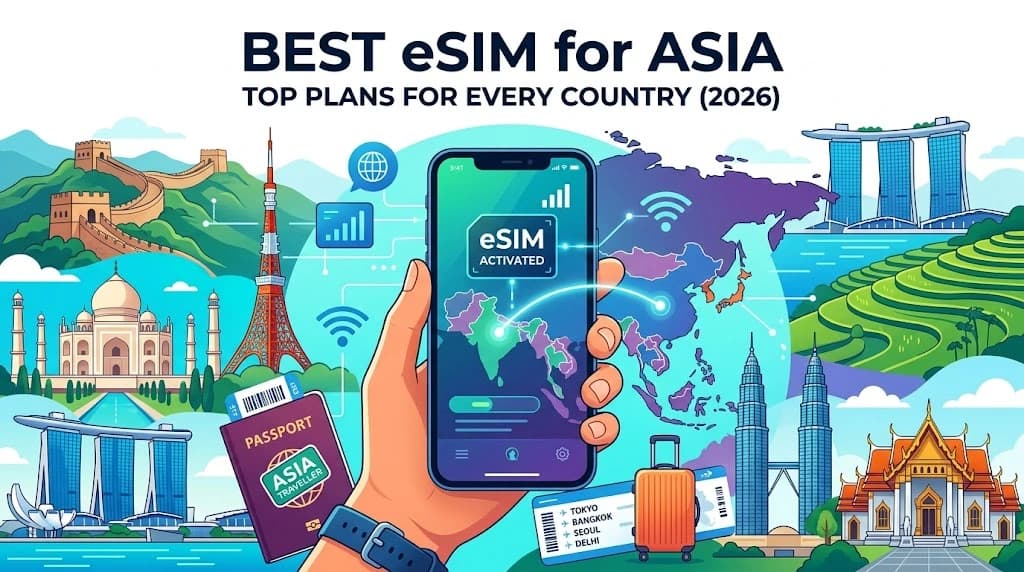
Your Ultimate Guide to the Best eSIM for Asia Travel in 2026
Asia. A continent of staggering diversity, from the futuristic skylines of Tokyo and Seoul to the ancient temples of Bagan, the bustling markets of Bangkok, and the serene beaches of Bali. As you plan your adventure across this incredible landscape in 2026, one thing is certain: staying connected is paramount. Whether you're navigating unfamiliar streets, sharing breathtaking photos, or simply keeping in touch with loved ones, a reliable internet connection is your best travel companion.
Forget the hassle of hunting for local SIM cards, dealing with language barriers, or fumbling with tiny trays. Enter the eSIM – your digital passport to instant, hassle-free connectivity. At FindMyEsim.io, we compare over 154 providers and 13,225+ plans across 203+ countries, making us your ultimate resource for finding the perfect eSIM for your Asian journey. This comprehensive guide will arm you with everything you need to know, from choosing between regional and country-specific plans to understanding your data needs and navigating internet restrictions.
Why eSIM is Your Best Friend for Asian Travel in 2026
The beauty of the eSIM lies in its simplicity and flexibility. Unlike traditional physical SIM cards, an eSIM is embedded directly into your device, allowing you to switch between network plans digitally. This means no more swapping tiny cards, no risk of losing your home SIM, and instant activation from virtually anywhere.
For travelers exploring the diverse landscapes of Asia, eSIMs offer unparalleled convenience:
- Instant Activation: Purchase a plan online and activate it within minutes, often before you even land.
- Seamless Switching: Keep your primary SIM active for calls/texts while using your eSIM for data.
- Multi-Country Freedom: Easily switch between regional and country-specific plans as you hop from one destination to the next.
- Cost-Effective: Often cheaper than international roaming and competitive with local physical SIMs, especially when you compare options on FindMyEsim.io.
- Eco-Friendly: No plastic waste from physical SIM cards.
Curious about how this technology works? Dive deeper with our guide: What is an eSIM? The Complete Guide for 2026. Ready to get started? Learn the simple steps to set up your digital connection: How to Install an eSIM on iPhone & Android (Step-by-Step Guide for 2026).
Regional vs. Country-Specific eSIM Plans for Asia: Which is Right for You?
One of the first decisions you'll face when choosing an eSIM for Asia is whether to opt for a regional plan covering multiple countries or a specific plan for each country you visit. Both have their merits, and the best choice depends entirely on your travel itinerary and preferences.
Regional eSIM Plans for Asia
What they are: These plans cover a broad geographical area, typically including 10-30+ countries across Asia (sometimes even extending to Oceania or the Middle East). They allow you to use the same data package across all included destinations.
Pros of Regional Plans:
- Ultimate Convenience: Buy once, connect everywhere. No need to purchase new eSIMs for each border crossing. Ideal for multi-country backpacking trips or extensive tours.
- Simplicity: One less thing to worry about when navigating different countries.
- Potentially Cost-Effective for Extensive Travel: If you're visiting many countries for short periods, a regional plan can often be more economical than buying individual country plans.
Cons of Regional Plans:
- Coverage and Speed Variability: While generally good, coverage and speeds can sometimes be less optimized than a country-specific plan, as the regional provider might roam on different local networks in each country.
- Higher Cost for Single-Country Trips: If you're only visiting one or two countries, you might end up paying more for a regional plan than a dedicated country-specific one with better value.
- Limited Data Options: Regional plans might offer fewer high-data or unlimited options compared to country-specific plans.
Country-Specific eSIM Plans for Asia
What they are: These plans are tailored for a single country, leveraging specific local network partnerships to offer optimized service.
Pros of Country-Specific Plans:
- Optimized Performance: Often provide the best possible speeds and coverage, as they are designed to work seamlessly with a particular country's top local networks.
- Better Value for Money: For single-country trips or longer stays in one location, you'll typically find more data for your money, or even unlimited data options.
- More Choice: A wider array of data packages, validity periods, and even some with local phone numbers (though less common for data-only eSIMs).
Cons of Country-Specific Plans:
- Less Convenient for Multi-Country Travel: Requires purchasing and installing a new eSIM for each country you visit, which can be cumbersome if you're frequently crossing borders.
- Potentially More Expensive for Extensive Travel: The cumulative cost of multiple country-specific plans can exceed that of a single regional plan if you're visiting many nations.
Actionable Advice:
Choose Regional if: You're embarking on a grand tour of 3+ Asian countries, prioritizing convenience and don't require extremely high data volumes in each location.
Choose Country-Specific if: You're visiting only one or two countries, staying for an extended period, or demand the absolute best speeds and most data for your money in a particular destination.
Recommended eSIM Providers for Asia (and How FindMyEsim Helps You Choose)
The eSIM market is booming, and with over 154 providers listed on FindMyEsim.io, finding the perfect one can feel overwhelming. Fortunately, for Asian travel, several providers consistently stand out for their reliable service, competitive pricing, and extensive coverage.
Some of the top providers frequently chosen by travelers to Asia include:
- Airalo: A pioneer in the eSIM space, offering extensive regional (e.g., 'Asialink') and country-specific plans across Asia with competitive pricing.
- Holafly: Known for its unlimited data plans in many popular destinations, though often at a higher price point. Great for heavy data users who don't want to worry about limits.
- Nomad: Offers a good balance of regional and country-specific plans, often with flexible validity periods and diverse data packages.
- Saily: A newer player backed by Nord Security, focusing on simple, affordable data plans.
- MobiMatter: Provides a wide range of plans from various local and international carriers, often with very competitive pricing.
- AloSIM: Another strong contender with good coverage and a user-friendly app.
This is where FindMyEsim.io becomes your invaluable travel planning tool. Instead of sifting through dozens of individual provider websites, we aggregate all the available plans, allowing you to filter by country, region, data amount, validity, and price. You can instantly compare options side-by-side to ensure you're getting the best deal for your specific needs.
Ready to see the options? Compare eSIM Providers directly on our platform. And if budget is your top priority, don't miss our guide to finding the most economical options: Cheapest eSIM Plans in 2026: Your Ultimate Guide to Budget Connectivity.
Understanding Your Data Needs for Asian Travel
How much data do you really need? This is a common question, and the answer largely depends on your travel style and how you intend to use your phone.
Typical Data Usage Scenarios:
- Light User (1-3 GB per week): Occasional map checks, messaging (WhatsApp, Line), light social media browsing, email.
- Moderate User (5-10 GB per week): Regular navigation, frequent social media updates (photos, stories), occasional video calls, light streaming (music).
- Heavy User (15-20+ GB per week or Unlimited): Daily video calls, extensive social media use, frequent high-definition streaming, online gaming, tethering other devices.
Actionable Advice:
- Estimate Generously: It's always better to have a little too much data than to run out in a foreign country.
- Utilize Wi-Fi: Take advantage of free Wi-Fi in hotels, cafes, and airports to conserve your eSIM data.
- Download Offline Maps: Google Maps and other navigation apps allow you to download maps for offline use, saving significant data.
- Download Content Beforehand: Download movies, podcasts, and music before you leave or when on Wi-Fi.
- Monitor Usage: Most eSIM apps provide real-time data usage tracking. Keep an eye on it to avoid surprises.
For most travelers, a plan offering 1-2 GB per day (e.g., 7-14 GB for a week-long trip) strikes a good balance between cost and connectivity. If you plan to work remotely, stream heavily, or tether multiple devices, consider higher data packages or even unlimited options where available.
Country-Specific eSIM Highlights and Recommendations
Each Asian country offers a unique connectivity landscape. Here's a deep dive into some of the most popular destinations and what to expect from your eSIM experience in 2026.
Remember, you can always find the most up-to-date plans and compare options directly on our site by country: Browse eSIM by Country.
Japan: Seamless Connectivity in the Land of the Rising Sun
Japan boasts one of the world's most advanced and reliable mobile networks. Whether you're navigating the bustling streets of Tokyo, exploring the ancient temples of Kyoto, or riding the Shinkansen, you can expect excellent 4G LTE and increasingly widespread 5G coverage.
- Connectivity: Exceptionally fast and reliable. Major cities have excellent 5G; rural areas maintain strong 4G.
- Data Needs: Due to heavy reliance on mapping, translation, and local apps (like Japan Transit Planner), 1-2GB per day is a good baseline. Many travelers opt for 10-20GB for a 7-14 day trip.
- Recommended Providers: Airalo, Holafly (for unlimited data), Ubigi, and local Japanese providers via eSIM aggregators.
- Special Tip: Japan's public Wi-Fi can be patchy or require registration. An eSIM is highly recommended for consistent access.
Thailand: Affordable Data for Tropical Adventures
Thailand offers excellent and affordable mobile data coverage, especially in popular tourist areas like Bangkok, Chiang Mai, and the islands. You'll find strong 4G LTE, with 5G expanding rapidly in urban centers.
- Connectivity: Generally very good and inexpensive. Major cities and tourist islands are well-covered.
- Data Needs: 1GB per day is often sufficient for typical tourist usage. If you're relying heavily on ride-sharing apps (Grab) and video calls, consider 2GB/day or more.
- Recommended Providers: Airalo, Nomad, and local Thai operators (e.g., AIS, TrueMove H) often have excellent eSIM options available through aggregators.
- Special Tip: Local providers often offer 'social media' data packs, but a general data eSIM is usually more versatile.
South Korea: Ultra-Fast 5G and Hyper-Connectivity
South Korea is a global leader in internet speed and connectivity. Expect blazing-fast 5G networks, even in many subway stations, and ubiquitous Wi-Fi. An eSIM here ensures you can tap into this hyper-connected environment effortlessly.
- Connectivity: Among the best in the world. Ultra-fast 5G is widespread.
- Data Needs: Even with abundant Wi-Fi, an eSIM with 1-1.5GB per day is recommended for navigation (KakaoMap, Naver Map), translation, and social media. Many opt for unlimited plans given the speed.
- Recommended Providers: Holafly (unlimited), Airalo, and local Korean carriers (SK Telecom, KT, LG U+) offer strong eSIM plans.
- Special Tip: Google Maps has limited functionality in South Korea; use local alternatives. An eSIM is crucial for seamless navigation.
Vietnam: Value and Improving Infrastructure
Vietnam's mobile network has seen significant improvements, offering good 4G LTE coverage across cities and tourist routes. 5G is still emerging but available in major urban areas. Data plans are generally very affordable.
- Connectivity: Good and constantly improving. Reliable 4G in most populated areas.
- Data Needs: 0.5-1GB per day should be enough for most travelers, given the affordability of plans. If you're using ride-hailing (Grab) and social media extensively, aim for 1.5GB/day.
- Recommended Providers: Airalo, Nomad, and local Vietnamese providers (Viettel, Mobifone, Vinaphone) offer great value eSIMs.
- Special Tip: Ensure your eSIM activates correctly upon arrival; sometimes, a quick toggle of airplane mode helps.
Indonesia (Bali Focus): Essential for Island Hopping
Indonesia, particularly popular destinations like Bali, relies heavily on mobile data for navigation, communication, and ride-hailing (Gojek, Grab). 4G LTE is standard, with 5G slowly rolling out in major cities like Jakarta and Denpasar.
- Connectivity: Good in populated areas and tourist hotspots like Bali. Can be spotty in very remote islands.
- Data Needs: 1-1.5GB per day is recommended for Bali and other tourist areas, as you'll be using maps, ride-hailing, and social media frequently.
- Recommended Providers: Airalo, Nomad, and local Indonesian providers (Telkomsel, XL Axiata) via eSIM aggregators.
- Special Tip: For longer stays or extensive island hopping, a local physical SIM from Telkomsel can sometimes offer better long-term value, but an eSIM is unbeatable for convenience.
India: Massive Market, Competitive Pricing, Expanding Coverage
India is a vast country with a rapidly expanding and highly competitive mobile data market. You'll find strong 4G LTE coverage in urban and semi-urban areas, with 5G rolling out quickly in major cities. Data is incredibly affordable.
- Connectivity: Excellent in cities, improving rapidly in rural areas. Highly competitive pricing.
- Data Needs: Given the low cost, many travelers opt for generous plans. 1.5-2GB per day is a comfortable amount, especially if you're navigating, translating, and using ride-sharing apps (Ola, Uber).
- Recommended Providers: Airalo, Nomad, and local Indian operators (Jio, Airtel) through eSIM platforms.
- Special Tip: Activating a local physical SIM in India can involve extensive KYC (Know Your Customer) documentation. An eSIM bypasses much of this hassle, making it a highly convenient option for tourists.
Asia eSIM Plan Comparison Snapshot (Indicative for 2026)
Below is a general comparison of typical data packages and pricing for a 7-day trip to some popular Asian destinations. Prices are approximate and subject to change, but illustrate the general range and value.
| Country/Region | Typical Data Need (7 Days) | Recommended Providers | Approx. Price Range (7 Days, 5-10GB) | Notes |
|---|---|---|---|---|
| Japan | 10-15 GB | Airalo, Holafly, Ubigi | $15 - $25 | Excellent 4G/5G, reliable. |
| Thailand | 7-10 GB | Airalo, Nomad, Local (AIS) | $10 - $20 | Affordable, good coverage. |
| South Korea | 10-15 GB (or Unlimited) | Holafly, Airalo, Local (SKT) | $20 - $35 | Ultra-fast 5G, highly connected. |
| Vietnam | 5-10 GB | Airalo, Nomad, Local (Viettel) | $8 - $18 | Improving network, great value. |
| Indonesia (Bali) | 7-10 GB | Airalo, Nomad, Local (Telkomsel) | $12 - $22 | Good coverage in tourist areas. |
| India | 10-15 GB | Airalo, Nomad, Local (Jio, Airtel) | $10 - $20 | Very affordable, expanding 5G. |
| Asia Regional | 10-20 GB (30 Days) | Airalo, Nomad, MobiMatter | $25 - $45 | Convenient for multi-country trips. |
Navigating Internet Restrictions in Certain Asian Countries
While most popular tourist destinations in Asia (Japan, South Korea, Thailand, Vietnam, Indonesia, India) enjoy open and unrestricted internet access, it's crucial to be aware that some countries in the region do implement internet censorship and restrictions.
The most prominent example of a country with significant internet restrictions in Asia is China, which operates under the 'Great Firewall'. While this guide focuses on other Asian countries, understanding the concept is important for any extensive Asian travel.
Actionable Advice for Restricted Countries (if your itinerary includes them):
- Install a VPN BEFORE You Arrive: If you anticipate visiting a country with internet restrictions, download and subscribe to a reputable Virtual Private Network (VPN) service before you depart. Many VPN websites and apps are blocked once you are inside such countries.
- Choose a Reliable VPN: Opt for well-known, paid VPN services that have a proven track record of bypassing censorship. Free VPNs are often unreliable, slow, and may compromise your privacy.
- Understand Local Laws: Be aware that using a VPN might be a legal grey area or even prohibited in some countries. Exercise caution and discretion.
- Test Your VPN: Ensure your VPN works before you travel by connecting to servers in other countries.
For the majority of travelers to the countries highlighted in this guide, internet restrictions will not be a concern, and your eSIM will provide direct, open access to the global internet.
Essential Tips for Using eSIMs in Asia
To ensure a smooth and stress-free connectivity experience throughout your Asian adventure, keep these expert tips in mind:
- Check Device Compatibility: Before purchasing any eSIM, confirm that your smartphone or tablet supports eSIM technology. Most newer models (iPhone XS/XR and later, Samsung Galaxy S20 and later, Google Pixel 3 and later) are compatible.
- Install Before You Go (or with Wi-Fi): For maximum convenience, install your eSIM profile before you leave home or immediately upon arrival while connected to airport Wi-Fi. This ensures you're instantly connected the moment you step out.
- Configure APN Settings (if needed): Most eSIMs auto-configure APN settings, but occasionally, you might need to manually input them. Your eSIM provider will supply these details if required.
- Keep Your Primary SIM Active (for 2FA): If you need to receive banking verification codes or other two-factor authentication (2FA) via your home number, keep your primary SIM active (but turn off data roaming for it to avoid charges). You can typically still receive SMS.
- Monitor Data Usage: Use your eSIM provider's app or your phone's settings to track your data consumption. This helps you avoid running out unexpectedly and plan top-ups if necessary.
- Understand Validity Periods: Pay close attention to the validity period of your eSIM plan (e.g., 7 days, 15 days, 30 days). Data often expires even if you haven't used it all.
- Reach Out to Customer Support: If you encounter any issues, don't hesitate to contact your eSIM provider's customer support. They are usually available 24/7 via chat or email.
- Consider a Backup Plan: For critical connectivity needs, having a second, smaller eSIM plan or knowing where to buy a local physical SIM as a backup can provide peace of mind.
Conclusion: Your Seamless Asian Journey Starts with eSIM
Exploring the wonders of Asia in 2026 is an experience of a lifetime, and staying connected should be the least of your worries. With an eSIM, you gain the freedom, flexibility, and convenience to navigate, share, and communicate effortlessly across bustling cities, serene landscapes, and vibrant cultures.
By understanding the nuances of regional vs. country-specific plans, estimating your data needs, and leveraging the power of platforms like FindMyEsim.io, you can secure the perfect connectivity solution for your trip. So, pack your bags, download your eSIM, and prepare for an unforgettable adventure – seamless connectivity guaranteed!
Frequently Asked Questions About eSIMs in Asia
Can I use my eSIM for calls and texts in Asia?
Most eSIM plans designed for travelers are data-only. This means they provide internet access but typically do not come with a local phone number for traditional calls and SMS. However, you can easily make calls and send messages using internet-based apps like WhatsApp, Line, Telegram, FaceTime Audio/Video, or Skype, which rely on your data connection. If you need a local number for specific reasons, some premium eSIM plans or local physical SIM cards might offer this, but it's less common for standard travel eSIMs.
Is 5G available with eSIMs in Asia?
Yes, absolutely! Many Asian countries, especially tech-forward nations like South Korea, Japan, and parts of China, have rapidly rolled out extensive 5G networks. In major cities and increasingly in other areas, eSIMs will connect to the fastest available network (including 5G) provided your device is 5G-compatible and the eSIM provider has roaming agreements with local carriers offering 5G. Always check the specific plan details on FindMyEsim.io for information on 4G/5G availability.
What if I run out of data on my eSIM?
If you deplete your data allowance, most eSIM providers offer easy top-up options directly through their app or website. You can usually purchase additional data packages to extend your connectivity. It's a quick and straightforward process, often taking just a few minutes. We recommend monitoring your data usage through your phone's settings or the eSIM provider's app to avoid unexpected disconnections.
How do I choose the best eSIM plan for my specific trip?
To choose the best eSIM plan, consider these factors:
- Your Itinerary: Are you visiting one country or multiple? This determines if a country-specific or regional plan is better.
- Trip Duration: Select a plan with a validity period that covers your entire trip.
- Data Needs: Estimate how much data you'll use daily based on your activities (browsing, streaming, video calls).
- Budget: Use FindMyEsim.io to compare prices and find the most cost-effective option for your data and duration needs.
- Provider Reputation: While FindMyEsim.io lists many, some providers consistently offer better service and support.
Our platform allows you to filter and compare all these options to find your ideal match.
Are eSIMs secure for travel?
Yes, eSIMs are generally very secure for travel. They eliminate the physical vulnerability of traditional SIM cards (e.g., losing or damaging the card). The digital activation process is encrypted, and your personal data transmitted over the network is as secure as with a physical SIM, subject to standard network security protocols. Just like with any internet connection, it's always wise to use a VPN for sensitive transactions, especially when connected to public Wi-Fi, but the eSIM technology itself is robustly secure.
FindMyEsim Editorial
eSIM Experts
The FindMyEsim team compares eSIM plans from 40+ providers to help travelers stay connected. We test, review, and analyze pricing so you can find the best deal for every destination.
Find the perfect eSIM for your next trip
Compare plans from 40+ providers across 170+ countries
Compare eSIM Plans