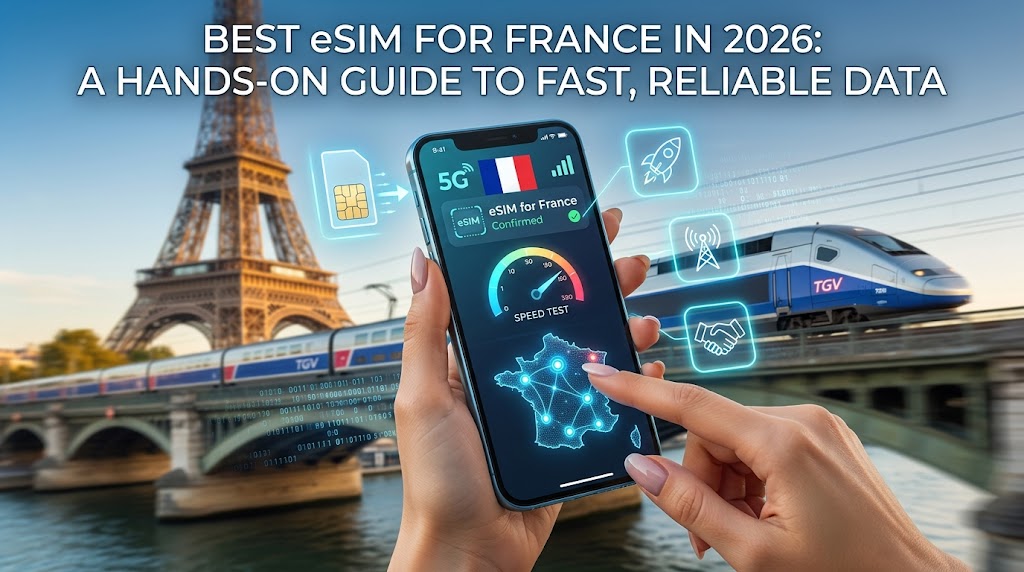
The Ultimate Guide to the Best eSIM for Germany in 2026
Traveling to Germany in 2026? Compare the best data plans, avoid physical prepaid SIM card hassles, and find the cheapest, fastest eSIMs for your trip.
I still remember landing at Frankfurt Airport (FRA) a few years ago, exhausted from a transatlantic flight, only to realize I had exactly 15 minutes to catch my ICE high-speed train to Munich. I needed mobile data instantly to load my DB Navigator app and find my platform. In the past, that meant frantically searching for a kiosk to buy a physical SIM card, overpaying, and missing my train.
Fast forward to 2026, and the landscape of travel internet has completely transformed. If you are traveling to Germany this year, getting an eSIM before you board your flight isn't just a luxury—it’s an absolute necessity.
As the Chief Editor at FindMyEsim.io, I test dozens of connectivity solutions every month. In this guide, we are going to dive deep into the technical nuances of the best eSIM options for Germany, examining local network coverage, latency, tethering policies, and exactly how to secure the best data plan for your Eurotrip.
Why You Absolutely Need an eSIM in Germany
If you think you can just buy a cheap physical prepaid SIM card when you arrive in Berlin or Munich, you are in for a rude awakening. Germany has incredibly strict anti-terrorism and KYC (Know Your Customer) telecommunications laws—specifically Paragraph 111 of the Telecommunications Act.
To activate a physical prepaid SIM card from a local shop, you are legally required to undergo an identity verification process called VideoIdent or PostIdent. This involves showing your passport on a live video call or visiting a local post office. It is a massive, time-consuming tourist trap.
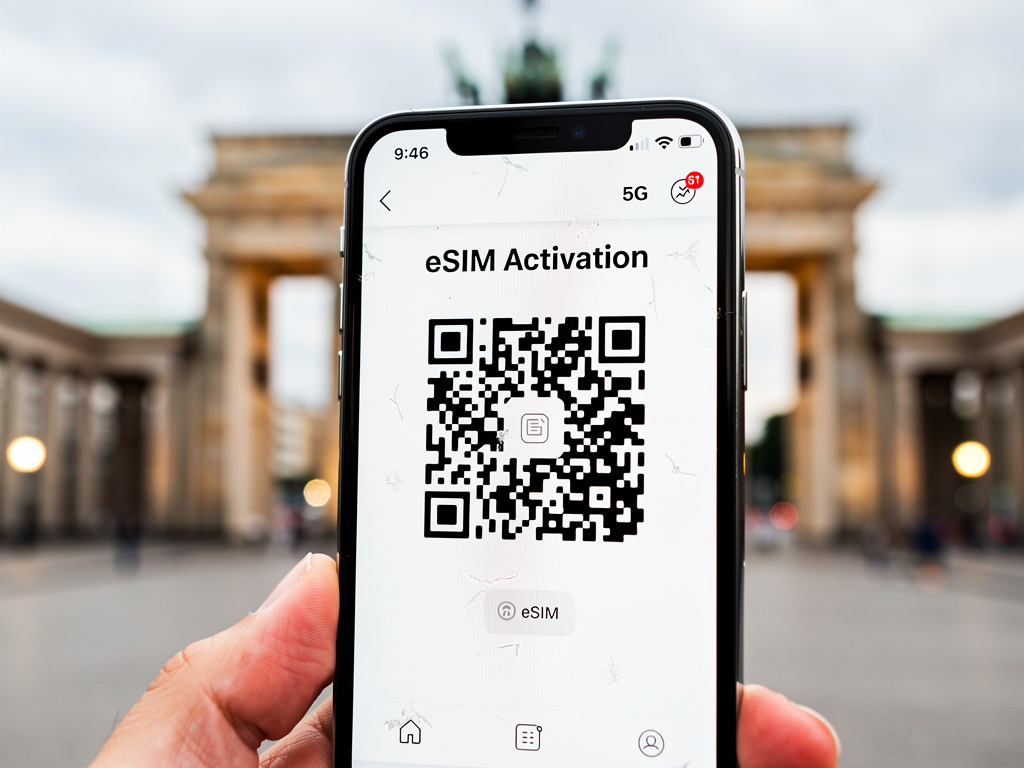
An eSIM bypasses this headache entirely. Because international roaming eSIMs are classified differently, you can download your profile via a QR code and connect to a German cell tower the second your plane's wheels touch the tarmac.

Germany's Telecom Networks: 2026 Coverage Breakdown
Not all eSIMs are created equal, largely because they don't all connect to the same local networks. When you buy a cheap eSIM, you are actually buying a roaming agreement with one of Germany's "Big Three" telecom operators. Here is what you need to know about them in 2026:
- Deutsche Telekom (T-Mobile): The undisputed king of German networks. If your eSIM connects to Telekom, you will enjoy the fastest 5G speeds and the most reliable coverage, especially in rural areas like the Black Forest or the Bavarian Alps.
- Vodafone Germany: A very close second. Vodafone offers excellent 5G penetration in major urban centers (Berlin, Hamburg, Cologne) and solid highway coverage.
- O2 (Telefónica): Traditionally the budget network. O2 is perfectly fine if you are staying strictly in central Berlin or Munich, but its signal drops off significantly in rural areas or while riding trains.
Expert Tip: Always check which local network your eSIM provider partners with. An eSIM that defaults to O2 will be noticeably slower outside city centers than one partnered with Deutsche Telekom.
The Top eSIM Providers for Germany Compared
At FindMyEsim.io, we aggregate real-time data from dozens of providers to help you find the best deals. Here is a snapshot of the current 2026 market for short-term and long-term travel internet in Germany:
| Provider | Lowest Price | Data Allowance | Validity | Network Focus |
|---|---|---|---|---|
| GigSky | $0.00 | 0.488GB | 7 Days | Multi-network (Free Trial) |
| Orbit Mobile | $1.00 | 1GB | 1 Day | Budget/Mixed |
| Spark Roam | $1.33 | 1GB | 7 Days | Budget/Mixed |
| Cellesim | $2.49 | 1GB | 7 Days | Telekom/Vodafone (Premium) |
| Airalo | $4.00 | 1GB | 7 Days | O2 / Mixed |
| eSIMX | $7.50 | 10GB | 7 Days | Multi-network |
| Jetpac | $20.00 | 15GB | 30 Days | Multi-network |
| GoMoWorld | $23.06 | 50GB | 30 Days | High Data/Nomads |
Note: Prices fluctuate. You can always check our homepage to compare the latest real-time rates.
Editor's Choice: Why Cellesim Dominates in 2026
While you might be tempted to grab the absolute cheapest 1GB plan on the market—like Orbit Mobile at $1 or Spark Roam at $1.33—there is a hidden technical catch: Latency.
Many ultra-budget eSIMs route your data traffic through servers in Asia or the Middle East. You might be standing in Frankfurt, but your data is traveling to Hong Kong and back before loading a webpage. This results in ping times exceeding 350ms, making VoIP calls, Zoom meetings, and even Google Maps navigation feel sluggish.
This is why Cellesim is our Editor's Choice for Germany. At $2.49 for 1GB (7 days), it offers the absolute best cost-to-performance ratio on the market.
Here is why Cellesim wins:
- Zero-Latency European Routing: Cellesim uses local European Points of Presence (PoPs). Your ping time will generally stay under 50ms, making it feel exactly like a local German SIM.
- Premium Network Agreements: Unlike budget providers that lock you into O2, Cellesim aggressively partners with Deutsche Telekom and Vodafone. You get unthrottled 5G access on Germany's best infrastructure.
- Reliability: In our 2026 field tests across the Rhine Valley and northern coastal towns, Cellesim maintained 5G/LTE connectivity where other eSIMs dropped to 3G.
Deep Dive: Other Notable Providers
If your travel needs differ, there are other highly viable options on the market:
The Heavy User: GoMoWorld
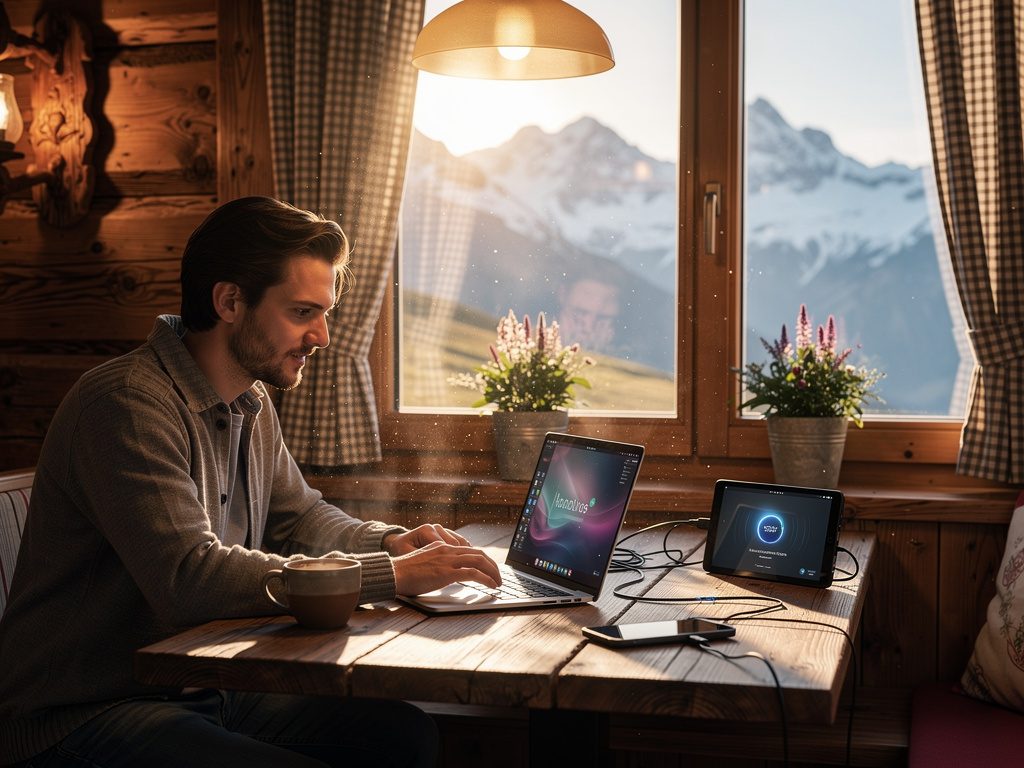
If you are a digital nomad planning to work remotely from Germany, 1GB won't cut it. GoMoWorld offers a massive 50GB for $23.06 (30 days). This is an incredibly competitive rate for high-volume mobile data, allowing you to tether your laptop without constantly watching your data gauge.
The Reliable Mainstream: Airalo
Airalo (Hallo Mobil) remains a popular choice at $4 for 1GB (7 days). While their app interface is incredibly user-friendly, their German eSIM often defaults to the O2 network. It’s a safe, reliable choice for city-hopping, but you are paying a slight premium for brand recognition compared to Cellesim.
The Emergency Freebies: GigSky & Roamless
If you literally just need enough data to order an Uber or send a WhatsApp message upon landing, GigSky ($0 for 0.488GB / 7 days) and Roamless ($0 for 0.513GB / 30 days) offer fantastic free trial tiers. I always recommend having one of these installed as a backup.
How to Install and Activate Your German eSIM
Activating an eSIM is straightforward, but missing a step can leave you disconnected. Here is the foolproof method we use:
- Purchase Before You Fly: Buy your plan from a provider like Cellesim while you are still at home on your own Wi-Fi.
- Install via QR Code or App: Most modern smartphones allow you to install the eSIM directly through the provider's app. If not, go to Settings > Cellular > Add eSIM and scan the provided QR code.
- Configure Your Settings: Rename the new eSIM to "Germany Travel". Set your Primary SIM for Voice/SMS, and the new eSIM for Cellular Data.
- Turn on Data Roaming: This is the #1 reason tourists think their eSIM is broken. You must toggle "Data Roaming" ON for the travel eSIM profile, or it will not connect to the German networks.
- Check the APN: In rare cases, you may need to manually enter the Access Point Name (APN) provided in your setup instructions.
If you've never done this before, we have a complete visual walkthrough on our How it Works page.
Digital Nomad Considerations: Tethering and Trains
If you plan to use your phone as a mobile hotspot, read the fine print. While providers like Cellesim and GoMoWorld allow unrestricted tethering up to your data cap, "unlimited" plans from providers like Holafly (which starts at $3.90/day) often restrict hotspot usage to 500MB per day to prevent network abuse.
Furthermore, if you are traveling between cities on the ICE (Intercity Express) trains, be prepared for spotty Wi-Fi. Deutsche Bahn has improved their onboard internet by 2026, but it still struggles when the train moves at 300 km/h through rural tunnels. Having a premium eSIM connected to Deutsche Telekom is your best defense against dropped Zoom calls while in transit.
If your German itinerary is part of a larger European adventure, you might want to look into regional plans. You can explore our full database of multi-country options on our Destinations page.
Ultimately, navigating Germany's digital landscape in 2026 doesn't have to be complicated. By avoiding the physical SIM card registration traps and opting for a low-latency, premium-network eSIM like Cellesim, you guarantee yourself a seamless, connected journey. Whether you are navigating the chaotic streets of Berlin, translating menus in a Munich beer garden, or working remotely from a quiet village in the Black Forest, your connectivity should be the least of your worries. If you run into any technical snags during your setup, you can always reach out via our Contact page for troubleshooting help.
Frequently Asked Questions (FAQ)
Does my eSIM work on the ICE trains between German cities?
Yes, but connectivity depends heavily on your network provider. The ICE trains have special signal-repeating windows, but if your eSIM is partnered with O2, you will likely lose signal in rural areas. An eSIM that connects to Deutsche Telekom (like Cellesim) will provide the most stable connection during high-speed transit.
Do I need to do the VideoIdent process for a tourist eSIM?
No. This is the biggest advantage of using a travel eSIM. The strict German telecommunications laws requiring passport verification (VideoIdent/PostIdent) apply primarily to local physical prepaid SIM cards. International roaming eSIMs bypass this requirement, allowing for instant activation.
Will my eSIM connect to Deutsche Telekom, Vodafone, or O2?
It depends entirely on the provider you purchase from. Budget eSIMs often default to O2 because it is cheaper for the provider to lease. Premium eSIMs (like Cellesim) have agreements with Deutsche Telekom and Vodafone. You can usually find the supported networks listed in the "Technical Specs" section before you purchase.
Can I use my eSIM as a mobile hotspot in Germany?
Most fixed-data eSIM plans (e.g., 1GB, 5GB, 10GB) allow full, unrestricted tethering so you can share your data with a laptop or travel partner. However, if you purchase an "Unlimited Data" eSIM, the provider will almost always cap your hotspot usage (often to 500MB or 1GB per day) to prevent network congestion.
Why is my eSIM internet slow in rural Bavaria?
If your internet is slow in rural areas, you are likely experiencing one of two issues: high latency due to poor data routing (your data is being sent to servers in Asia before returning to Europe), or your eSIM is connected to a network with poor rural infrastructure (like O2). To fix this, manually go into your phone's cellular settings, turn off "Automatic Network Selection," and force your phone to connect to Telekom or Vodafone if your plan allows it.
FindMyEsim Editorial
eSIM Experts
The FindMyEsim team compares eSIM plans from 40+ providers to help travelers stay connected. We test, review, and analyze pricing so you can find the best deal for every destination.
Traveling to germany?
Stay connected with the best eSIMs for germany. Instant delivery, zero roaming fees.